
July 19, 2026
What the Wall Carries
Safety, usefulness, and beauty are not separate decisions. They begin at the same point: a wall that can be trusted.
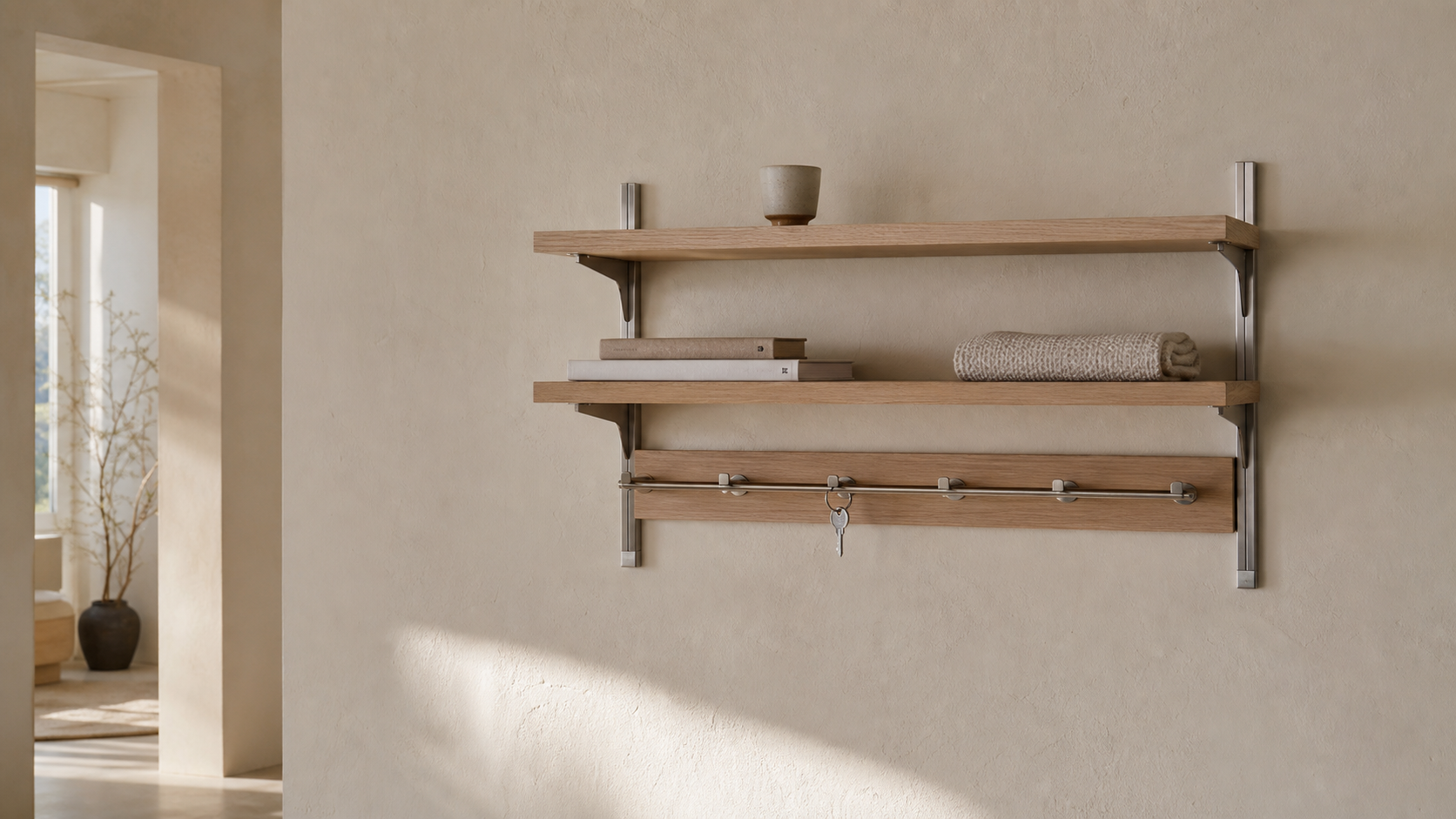
A wall object enters the everyday quietly. A key rail catches the last thing you touch before leaving. A shelf takes the book, cup, or folded towel that would otherwise travel across a room. Because these objects are close to the body and used without ceremony, they must earn trust before they ask for attention.
For us, safety begins before the silhouette. It is in the relationship between load, material, fixing, and wall. A bracket should sit square. A rail should hold its line. The weight a piece can carry should be considered in the drawing, then tested in the making. These decisions are often invisible once an object is installed; that is precisely why they matter.
Usefulness gives the object a reason to remain. We look for the small points of friction in a room: the bag left on a chair, the towels without a place to dry, the keys that migrate across a table. A good wall object does not make a ritual of storage. It shortens a movement, clears a surface, and becomes part of a routine without asking to be noticed.
Beauty follows from that clarity. It is not an extra layer applied after the work is done. A proportion that feels calm, a timber edge that meets a metal bracket cleanly, and the right amount of space around a useful thing all come from the same attention. When nothing is ornamental for its own sake, the object can remain visually quiet while still changing the room.
This is the standard we return to: make what is safe enough to rely on, practical enough to use every day, and considered enough to live with for a long time. The wall carries more than objects. It carries the small order that lets the rest of a day move more freely.